

How to choose a reliable corrugated box supplier for exports
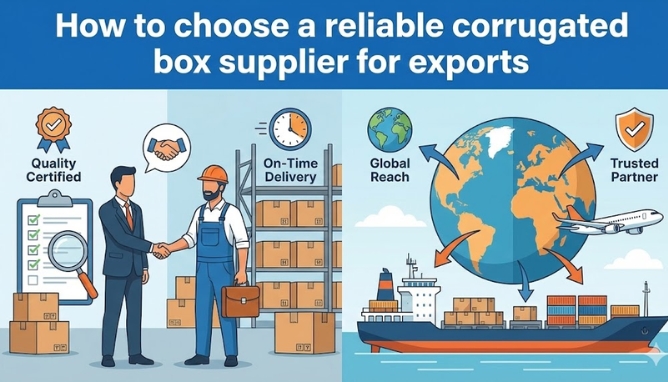
Export packing is not same as local packing. For export your boxes must survive long handling, stacking in containers, humidity changes and rough transit. Choosing a reliable corrugated box supplier for exports will save money, reduce damage and keep your buyers happy. Below is a simple step by step guide you can follow, with real checks, tests and questions to ask the supplier.
1) Know what really matters for export boxes
For export you must check these basics first: box strength, stacking capacity, moisture resistance, consistent quality, and certifications for sustainability or quality management. Tests like Edge Crush Test (ECT) and Box Compression Test are used to measure board and box strength. These tests show if the box will stand stacking in a container and long transit.
Also check whether the supplier can suggest the correct ply, flute type and GSM for your product weight and destination climate. Humidity in many ports causes weaker boards to sag, so the right board grade matters.
2) Look for credible certifications and standards
Certifications are a quick trust signal. Useful ones for export buyers are:
–ISO 9001 for quality management systems. It shows the supplier follows documented quality processes.
–FSC or other chain of custody marks if you want sustainable or certified fibre paper. Global buyers often ask for this.
-Any lab testing reports for ECT, BCT or bursting strength done by a recognised lab or third party.
A supplier having these certificates does not guarantee perfect work, but it reduces risk and helps with large global buyers.
3) Check their export experience and references
Ask the supplier about past export shipments. Good things to ask:
- Which countries they have exported to
- Examples of clients for export packing
- Can they share shipment photos, loading photos and buyer references
Suppliers who work with exporters know container stacking rules, palletising methods and how to protect cartons during sea or air transport. If they can show proof of past export orders, that is a strong sign.
4) Ask for specific test data and samples
Before bulk order, ask for:
- Sample boxes of the exact size and print you need
- ECT and BCT reports for the board used
- A small trial shipment if possible
Testing on your own will save big losses later. Make sure sample boxes are from the same production line that will make the bulk order. If the supplier refuses samples or test data, treat that as a red flag.
5) Verify production capacity and lead time
Export orders often need consistent supply over months. Ask:
- Monthly production capacity for your SKU
- How they handle urgent reorders
- Lead time after order confirmation
- Ability to do partial shipments or staggered deliveries
If a supplier cannot meet your timeline reliably, it can break your export promise. Choose a supplier with spare capacity and stable lead times.
6) Quality control steps to insist on
Good suppliers will offer these QC controls. If they do not, ask them to add these to the PO:
- Incoming paper inspection (GSM, moisture)
- In-process checks for printing, gluing and dimensions
- Final inspection with sample records and images
- Random box compression checks and stacking trials before shipping
Ask for a simple QC report with photos for each shipment. This creates accountability and helps solve disputes quickly.
7) Packaging design for export protection
A reliable supplier will help with design that protects product and saves cost, including:
- Right box style and flute choice for strength
- Internal dividers, inserts or cushioning where needed
- Pallet pattern that avoids overhang and reduces movement
- Moisture barrier or poly-lamination for humid routes
Good designs reduce weight and cost and still give protection. Discuss these items during sample stage.
8) Verify logistics understanding and incoterms
Export involves shipping, customs and insurance. Ask the supplier if they understand:
- Palletised container loading and lashing rules
- Export packing list and marking requirements
- Your chosen incoterm and who handles freight and insurance
Suppliers who know these details will pack cartons ready for fast loading and customs checks.
9) Sustainability and buyer demands
Many foreign buyers prefer sustainable packaging and certified fibres. If your buyer asks for FSC or recycled content, check if the supplier has chain of custody certification and can label boxes appropriately. Sustainability can give you an advantage in B2B export deals.
10) Payment, contracts and sample clauses
For export orders include clear written terms:
- Sample approval clause that production will only begin after your written sign off
- Rejection criteria with acceptable tolerance levels for dimensions and print
- Payment schedule (e.g., 30% advance, 70% after inspection) and penalties for late delivery
- Warranty or replacement clause for manufacturing defects discovered on arrival
A clear PO reduces disputes and protects you.
11) Red flags to avoid
Avoid suppliers who:
- Refuse to share samples or test reports
- Give vague lead times and cannot commit production capacity
- Lack basic quality processes or certificates
- Have very low prices without clear explanation
Low price alone is not a reason to choose for export. It often costs more when boxes fail at destination.
Final note
Choosing a reliable corrugated box supplier for exports means checking strength tests, certifications, export experience and QC systems. Do samples, use a clear PO and test a trial shipment. A little homework up front saves big money and reputation later.