

How to Choose Durable 3 Ply Corrugated Boxes for Shipping Heavy Items
Choosing the right packaging is crucial when shipping heavy products. A strong and durable 3 ply corrugated box can protect goods from damage, reduce return rates, and ensure safe delivery. However, not all cardboard boxes offer the same strength. Understanding the key factors that determine durability can help businesses select the best packaging for heavy shipments.
What is a 3 Ply Corrugated Box?
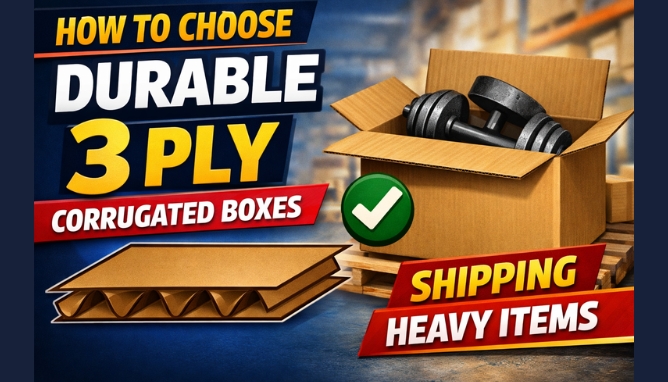
A 3 ply corrugated box consists of three layers of paper: two flat liner boards and one fluted (wavy) layer in the middle. The fluted layer provides cushioning and structural strength, helping the box resist compression, impact, and pressure during shipping.
While 3 ply boxes are commonly used for lightweight to medium-weight items, selecting the right specifications can make them suitable for moderately heavy shipments.
1. Check the Edge Crush Test (ECT) Rating
One of the most important factors when choosing durable corrugated boxes is the Edge Crush Test (ECT) rating. ECT measures how much stacking pressure a box can withstand before it collapses. A higher ECT rating indicates stronger compression resistance.
For example:
- 32 ECT – Suitable for medium-weight shipments
- 44 ECT or higher – Recommended for heavier products or stacked shipments
In general, boxes with higher ECT ratings perform better during transportation, warehouse stacking, and pallet shipping.
2. Select the Right Flute Type
The flute type inside corrugated cardboard plays a major role in durability. Flutes are the wave-shaped paper layers that provide cushioning and structural support.
Common flute types include:
- A-Flute: Thick and strong, ideal for cushioning fragile items
- B-Flute: Offers better compression resistance
- C-Flute: A balanced option for shipping heavier goods
For shipping heavier items in 3 ply boxes, B-flute or C-flute is typically recommended because they provide better stacking strength and protection.
3. Match the Box Strength with Product Weight
Before selecting a corrugated box, determine the total weight of the product including internal packaging. Packaging experts recommend matching the box’s strength rating to the shipment weight to avoid collapse or damage.
Typical guidelines include:
- 0–20 lbs: Standard single-wall box
- 20–40 lbs: Stronger single-wall box with higher ECT
- 40+ lbs: Consider double-wall boxes for extra protection
If your products approach the upper weight limit, you may need reinforced corners or additional internal support.
4. Use High-Quality Linerboard Material
The linerboard material used in corrugated boxes affects durability. Boxes made from kraft linerboard are stronger and more resistant to tearing compared to lower-grade recycled liners. Kraft materials can improve compression strength and increase overall box durability.
Choosing high-GSM (grams per square meter) paperboard also enhances load-bearing capacity, making the box more suitable for heavier shipments.
5. Choose the Correct Box Size
Oversized boxes can reduce structural strength and increase the risk of crushing during transit. Selecting the correct box dimensions ensures better weight distribution and reduces internal movement.
A properly sized box should:
- Fit the product snugly
- Allow space for cushioning materials
- Prevent excessive empty space inside the package
This helps maintain the structural integrity of the box throughout the shipping process.
6. Add Internal Protective Materials
Even durable boxes may need additional protection for heavy items. Packaging fillers such as:
- Bubble wrap
- Corrugated inserts
- Foam padding
- Air pillows
can absorb shock and prevent products from shifting inside the box.
Conclusion
Choosing durable 3 ply corrugated boxes for shipping heavy items requires careful evaluation of several factors, including ECT rating, flute type, material quality, and box size. By selecting boxes with the right specifications and adding protective cushioning, businesses can significantly reduce product damage during transit.
Investing in the right packaging not only protects products but also improves customer satisfaction and shipping efficiency.